
Latest articles


Most popular
AUGUST 10, 2026
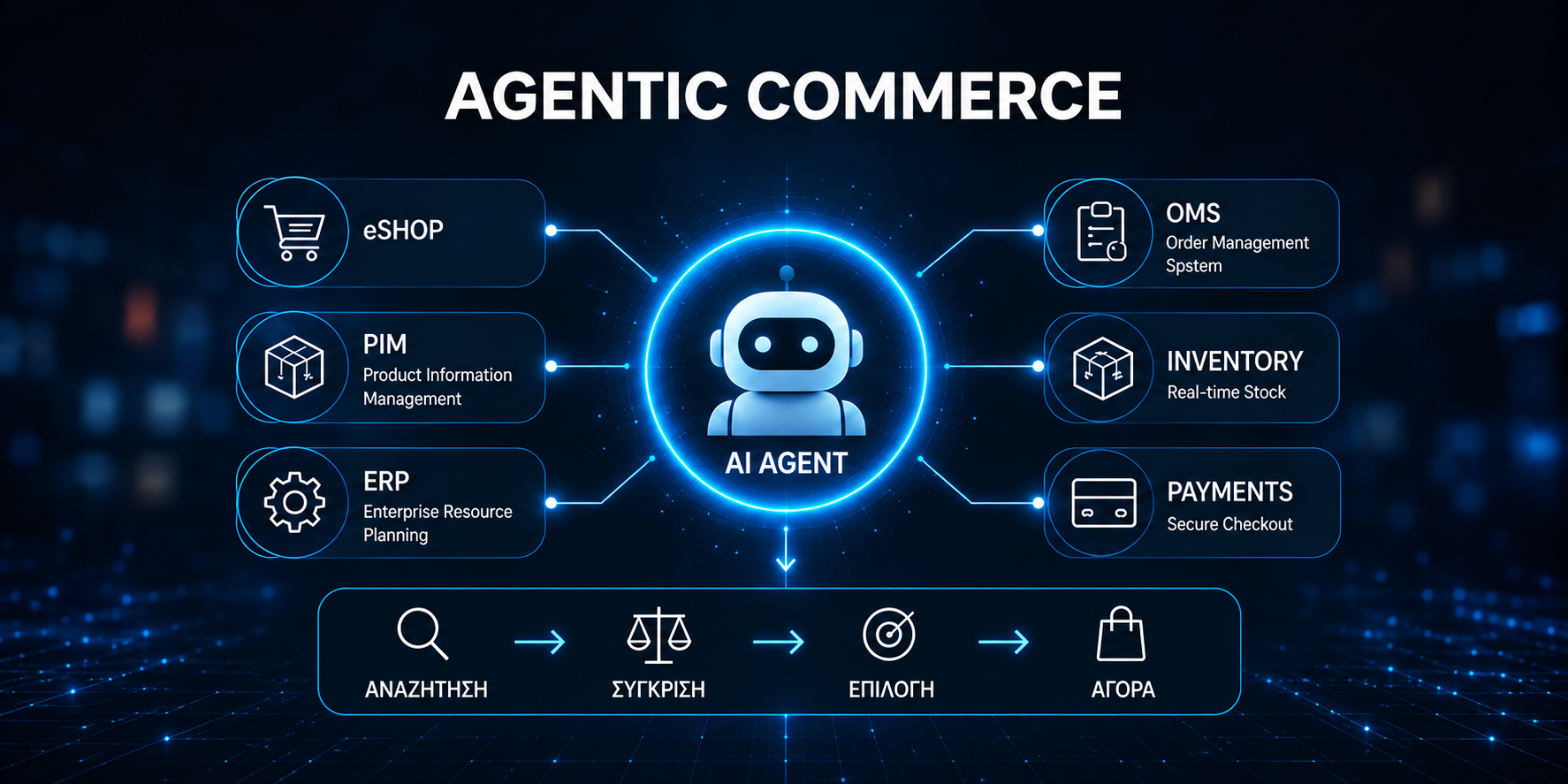
Agentic Commerce: How AI Agents Are Changing eCommerce

JUNE 1, 2021
CONTENT MARKETING – What Is It and How Important Is Content Marketing Today?

AUGUST 7, 2017
8 Web Design trends for 2017
DECEMBER 10, 2019
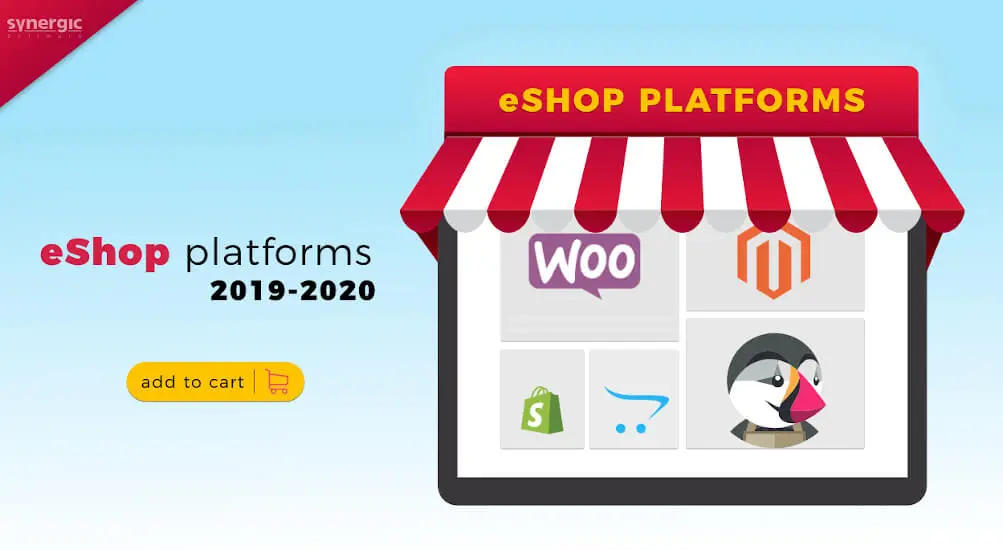
The Most Popular eShop Platforms for Building an Online Store

DECEMBER 10, 2023
8 Questions Your Website Must Answer in 5 Seconds
Unified Commerce: What It Is and How It Simplifies Everyday Business Operations
Products, inventory, orders, and customers in one system, for better customer service and business growth with less manual work.
How many different systems do you need to use to process a single order correctly?
Your eShop to view the order. Your ERP to check stock availability. The shipping carrier’s application to generate the shipping label. Perhaps even an Excel spreadsheet to confirm that all the information matches.
When order volumes are low, this is manageable. However, as you add more products, suppliers, and sales channels, the number of checks increases. Your team spends more and more time coordinating tasks, and every mistake can lead to customer dissatisfaction.
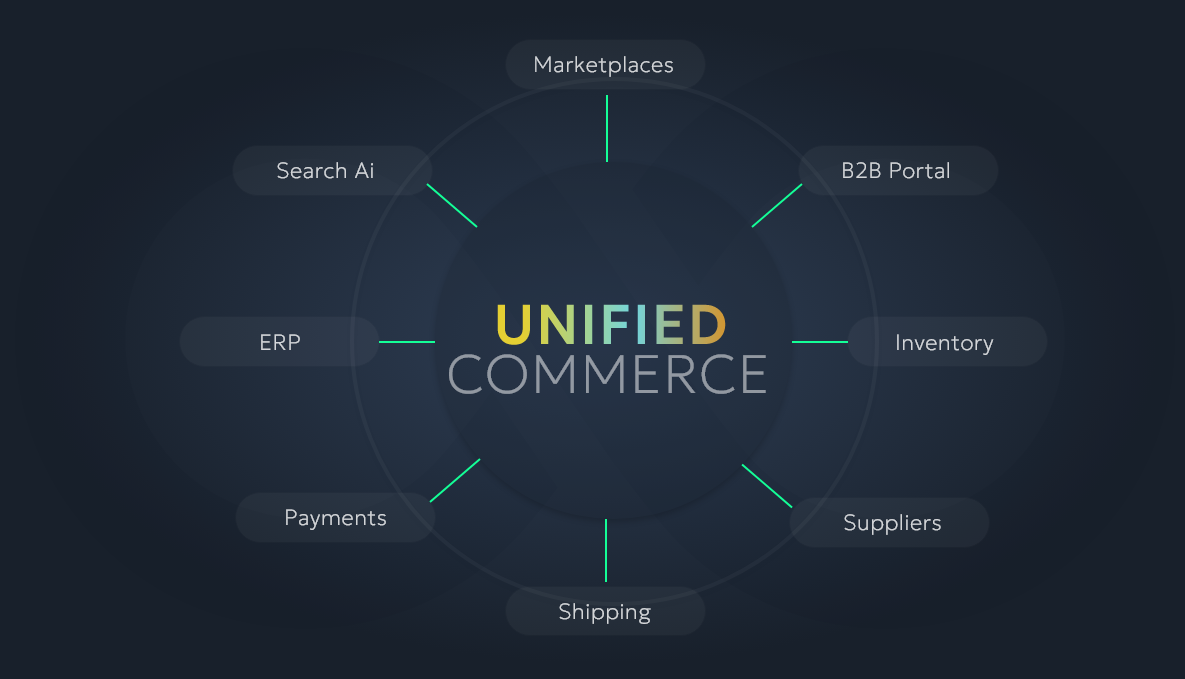
With Unified Commerce, products, inventory, orders, and sales channels are managed through a single commerce platform that connects with your existing business systems. This allows you to sell through multiple channels while managing everything centrally.
What Is Unified Commerce, in Simple Terms?
Unified Commerce is an approach to managing your business through a single, integrated commerce platform. From one place, you can manage products, prices, inventory, and orders across all your sales channels, using consistent information and automated processes.
Your eShop, physical store, marketplace, and telephone orders all draw information from the same up-to-date source for:
Products and their attributes
Prices and promotions
Available inventory
Orders and their status
Customers and their purchase history
Centralized management does not mean everything has to be identical across all channels. For example, you can offer different wholesale prices, a separate product catalog on a marketplace, or a special discount for a particular customer.
You define the prices, discounts, and products available through each sales channel, and the system automatically applies your settings.
Each piece of information is entered once, in the right place, and automatically updated wherever it is needed.
How Does It Work in Practice?
Let's say you operate an eShop, a physical store, and also sell through Skroutz. You have two units of a particular product in stock.
A customer purchases one unit through your eShop.
The order is recorded centrally, and one unit is reserved for the customer (inventory reservation). The available stock is reduced, and the other sales channels are updated.
If the second unit is sold in your physical store shortly afterward, the product is marked as out of stock on both your eShop and Skroutz, without anyone having to update the information manually.
Your order management team can view the order, payment, and shipping details in one place. Shipping label generation and customer notifications are automated, eliminating the need to enter the same information multiple times.
If the customer calls, your employee can immediately see the order's current status. If a return is required, it is linked to the original purchase. Once the returned product has been received and inspected to confirm that it is suitable for resale, it becomes available again.
Updates to a marketplace or ERP are not always instantaneous, as this depends on each system. For this reason, the platform treats units already reserved for customer orders as unavailable and verifies that each update has been completed successfully.
How Does Unified Commerce Relate to Omnichannel?
Omnichannel focuses on how customers shop and receive service: enabling them to move seamlessly between an eShop, a physical store, and telephone support.
For example, customers should be able to purchase online and collect their orders in-store without feeling as though they are dealing with two separate businesses.
A Unified Commerce platform supports this experience by centrally managing products, prices, inventory, orders, and customer information.
Depending on the features enabled, it can support:
Buy online, pick up in-store (BOPIS)
Shipping from the warehouse or store where the product is available
Returning online purchases to a physical store
For these services to work properly, businesses need accurate inventory information, product reservations, and clear procedures for employees responsible for collection, shipping, or returns.
McKinsey's analysis of omnichannel operations examines how inventory, order management, and system synchronization work together.
What Problems Does Unified Commerce Solve?
Inaccurate Inventory and Canceled Orders
A product appears available online even though it has already been sold in the physical store. Someone then has to contact the customer, suggest an alternative, or issue a refund.
With a shared inventory system across all sales channels, where stock is reserved when an order is placed, these errors are reduced and the availability information customers see becomes more reliable.
Product Information That Constantly Needs Correction
Each supplier provides different product details, categories, images, and prices. The same tasks must be repeated for every product before it is ready for sale.
With structured product catalog management, data is collected, validated, and adapted before being distributed to sales channels.
Work completed once for a product can be reused everywhere.
Orders Scattered Across Different Applications
Your eShop has its own order list, the marketplace has another, and telephone orders are recorded separately. It becomes difficult to know what is pending and who is responsible for handling it.
With all orders managed in one place, you can easily identify which orders have priority, which are awaiting payment, and which are ready to ship.
More Sales Channels, More Manual Work
Adding a new marketplace may increase sales, but it can also increase the time required for updates and checks.
With a centralized product catalog and structured processes, each new sales channel can use the functions and data already available in your existing system.
It requires its own integration and configuration, rather than an entirely separate workflow.
What Are the Benefits for Your Business?
Less repetitive work. Fewer duplicate entries and fewer checks across different applications. With the same team, your business can handle more tasks while dedicating more time to customers and sales.
Greater control. View orders, inventory, and pending tasks in one place. Identify delays and areas requiring attention more easily.
More reliable customer service. Customers receive accurate information about product availability and order status. Employees have the information they need to provide effective support.
Easier expansion. A second eShop, a business-to-business (B2B) portal, or a new physical store can use products, data, and processes that are already organized.
Measurable value. Manual work, corrections, and canceled orders all have a cost. The benefits become clear through practical metrics: the time required to process each order, the number of inventory errors, and how quickly new products become ready for sale.
How Essential Is Unified Commerce?
It mainly depends on how complex your business operations are.
If you have a small product catalog and sell through a single channel, a simpler solution will probably be sufficient.
However, if you work with multiple suppliers, manage a large catalog, and sell through different channels, Unified Commerce can make a real difference, regardless of your company's size.
The need becomes more apparent when:
Daily checks are required to keep prices and inventory synchronized.
Order cancellations increase because of incorrect stock availability.
Adding new products or integrating new suppliers takes too long.
Customer service requires searching through multiple applications.
Every new sales channel significantly increases manual work.
If you are just starting out and the Unified Commerce platform you choose also includes core business management features, you can organize products, sales, orders, and invoicing in one system from the beginning, without needing a separate ERP.
As your business grows, you can add more functionality.
Do You Need to Replace All Your Existing Systems?
Not necessarily. The transition can take place gradually.
An ERP that already meets your needs can remain in place and be integrated with the platform. The same applies to an existing eShop, provided it supports the necessary integrations.
If you do not have an ERP or are just starting your business, some Unified Commerce platforms also cover essential commercial operations, including customer and supplier records, purchasing, warehouses and inventory, in-store point of sale (ePOS), and receipt and invoice issuance through an integrated invoicing provider.
Accounting continues to be handled by your accountant.
The first step is to document how your business currently operates:
Where your data comes from
Who updates it
Where orders are recorded
Which tasks are repeatedly performed manually
Next, priorities are established, data is corrected and organized, and the new processes are tested.
Training the people who will use the platform is also part of the implementation process, ensuring that the new system is used effectively in everyday operations.
Unified Commerce and AI Agents
An AI agent is a digital assistant that can carry out specific tasks, such as finding a product, completing a purchase, or checking pending orders.
To work effectively, it needs reliable information and access to the appropriate functions.
Unified Commerce brings products, prices, inventory, and orders together in one system, allowing the assistant to use the same information as your employees.
With the appropriate integrations and permissions, it can also perform tasks while following your business rules and requesting approval whenever necessary.
For AI assistants to communicate with merchants' systems, they use common communication standards known as protocols. These vary depending on whom the assistant serves.
The customer agent searches for and purchases products on behalf of the customer, for example through ChatGPT or Gemini.
To complete a purchase from your store, it uses protocols such as the Universal Commerce Protocol (UCP), an initiative led by Google, and the Agentic Commerce Protocol (ACP), developed by OpenAI and Stripe.
The merchant agent supports your daily business operations. It can answer questions about inventory and orders or prepare reports.
The Model Context Protocol (MCP), created by Anthropic, provides controlled access to your business data and system functions.
A well-organized commerce platform provides the foundation these AI assistants need to operate effectively.
Support for each protocol and the tasks an AI assistant can perform depend on the integrations and features that have been implemented.
A Foundation for Your Next Step
Unified Commerce helps businesses organize their current operations while preparing for future growth.
The goal is practical: to serve more customers, sell through new channels, and maintain control over business operations.
Synergic Unified Commerce is a comprehensive commerce platform that brings together product, inventory, order, and sales channel management.
It provides essential tools for daily operations, automates repetitive tasks, and integrates with the systems your business already uses.
For businesses without an ERP, it also supports core commercial operations, including ePOS and document issuance through an integrated invoicing provider.
The product catalog is already structured for AI-powered search, while connectivity with AI assistants through API and MCP integrations is coming soon.
Let's explore how your business operates today and identify the right next step. We'll show you how a unified commerce platform can simplify your daily operations and support your business growth.