eCommerce Sales in 2022
According to current forecasts, global eCommerce revenues were expected to reach $5.4 trillion in 2022.
The COVID-19 pandemic, combined with the development of high-speed networks such as 4G, 5G, and fiber optics, as well as the increasing use of smartphones for internet access, were among the main factors driving the growth in the number of eCommerce users.
The global crisis caused by the pandemic created a difficult business environment, but one that ultimately had a positive impact on eCommerce. Consumers spending more time at home also spent more time shopping online.
However, in 2022, as restrictions were relaxed and physical stores reopened, online sales began to readjust toward pre-pandemic levels.
This trend could be further influenced by inflationary pressures, as consumers may be forced to reduce spending both online and in physical stores. According to eMarketer forecasts at the time, global eCommerce sales were expected to increase by 12% to approximately $6 trillion in 2023.
In Greece, according to data from ELSTAT, out of 39,460 businesses employing 10 or more people, with a total turnover of €295.9 billion, 7,472 received orders through an eShop, dedicated applications, or EDI messages. This represented 18.9% of businesses, while turnover generated from these orders reached €20.5 billion, corresponding to 6.9% of total turnover.
The penetration of eCommerce continues, although at a somewhat slower pace. Worldwide online sales increased from $1.33 trillion in 2014 to $4.89 trillion in 2021.
This trend is expected to continue as a result of the expansion of 5G networks, emerging consumer trends such as social shopping, and the adoption of innovative technologies including Augmented Reality, Virtual Reality, and Artificial Intelligence.
New Trends in eCommerce
eCommerce has brought significant changes to both retail (B2C) and wholesale (B2B) sales.
Today, it has evolved considerably in order to meet changing consumer needs and make the shopping experience easier and more enjoyable.
Modern professionals and business owners now have access to innovative services and technologies at a relatively low cost, with immediate business benefits.
The objective is to continuously expand commercial activity while reducing or maintaining costs, strengthening the corporate brand, and meeting the constantly increasing needs and expectations of customers.
TOP eSHOPS 2023
Discover some of the most popular eShop systems in 2023:
WooCommerce – Shopify – PrestaShop – OpenCart – Magento – Wix
The following sections provide a brief overview of some of the most important developments and trends that have influenced, or are expected to influence, the growth of eCommerce today and in the near future.
1. Augmented Reality (AR)
Augmented Reality involves the use of audiovisual content to provide a more complete and engaging presentation of products in modern eShops, with the goal of increasing sales, encouraging social sharing, and improving the customer experience.
AR technology allows consumers to virtually try products using smartphones or Virtual Reality headsets.
In this way, AR can help eShop visitors feel as though they are inside a physical store and interacting directly with products.
It can also show customers how products would look in their own environment or, in the case of clothing and accessories, how they might look when worn.
AR is changing the online shopping experience in industries such as fashion and home decoration because consumers can gain a much better understanding of a product without needing to see it in person.
As AR and VR technologies and devices continue to develop, Augmented Reality is expected to become an increasingly important feature of modern online stores.

2. Social Commerce
The term “social media marketing” includes every type of marketing strategy that uses social media to promote and sell products, build relationships with customers, and improve brand awareness.
Social media platforms serve as sources of inspiration and give brands opportunities to gain wider recognition as they continue to play an important role in consumers' everyday lives.
“Social commerce” refers specifically to selling products directly through social media platforms.
Social commerce is a subset of eCommerce and focuses exclusively on promoting and selling products through social media.
With social commerce, businesses manage and promote products through their advertisements and social media pages.
However, sales are completed directly within the social media environment rather than through the company's own online store.
The entire buying journey — from product research through to payment — can take place within the social networking platform.
Users can purchase products immediately using features such as “Add to Cart” and checkout without leaving the platform.
The increasing amount of time people, especially younger generations, spend on social media applications has made social commerce an important trend for the future of eCommerce.
Another important development is the apparent preference of younger users for social media platforms focused primarily on video and visual content.
This is reflected in the shift of younger audiences from platforms such as Facebook toward YouTube, Instagram, Snapchat, and TikTok.
Businesses should take this development into account when preparing their strategies for the coming years.
Digital content such as video and 360-degree photography is increasingly important for effectively presenting many product categories, including clothing, footwear, beauty products, and fashion.
Social media platforms are also becoming a primary source of digital content through which younger consumers discover brands and products that interest them.
3. Omnichannel Customer Experience
Consumers use an increasing number of channels during the product research and purchasing process, including eShops, marketplaces, social media, physical stores, and search engines.
Omnichannel commerce provides consistency and continuity throughout the customer journey, regardless of the channel or medium customers use to interact with a company.
Businesses should focus on providing a consistent experience whether customers shop through an online store using a mobile device or laptop, or visit one of the company's physical stores.
Consumers naturally do not perceive a company as a collection of separate entities based on the channel they are using.
When customers make a purchase, they expect to receive the same product quality, pricing, and related benefits regardless of the sales channel they choose.
Technological developments have blurred the boundaries between the physical and digital worlds, accelerating the development of omnichannel experiences.
Sales and marketing channels increasingly converge in order to provide seamless experiences throughout every stage of the purchasing journey, with the ultimate objective of improving customer convenience and satisfaction.
Emerging trends such as social commerce and voice shopping are also transforming traditional eCommerce by putting consumers in control and making shopping part of everyday life.
Customers can now shop wherever they are — at home, at work, or while travelling — through different channels such as social media, search engines, news media, physical stores, and eShops, using devices including smartphones, virtual assistants, televisions, and laptops.

4. Artificial Intelligence (AI)
The rapid pace of innovation in Artificial Intelligence has significantly transformed the eCommerce landscape.
AI can help modern retail businesses provide better shopping experiences to their customers.
By using the large amounts of data collected through customer interactions with different communication and service touchpoints — such as eShops, social media, and search engines — businesses can gain a deeper understanding of their customers.
This enables better business decisions and more accurate predictions of consumer trends.
With the help of Artificial Intelligence and Machine Learning, modern eShops can increase sales and customer satisfaction by applying advanced methods in digital marketing, sales, and customer service.
Some of the most important AI applications transforming eCommerce strategies include:
Personalized product recommendations
Personalized omnichannel marketing
Customer service and back-office automation
Richer and more detailed customer insights
Improved sales forecasting
Artificial Intelligence improves the performance of eShops and marketplaces by increasing conversions, automating services, and improving customer experience around the clock.
AI now makes it possible to provide online consumers with an automated and personalized shopping experience.
From the moment a customer enters an eShop, AI systems can continuously collect data about how they browse, which product categories, brands, and products they are most interested in, when they purchase, and what they search for in a product or service.
AI technology is therefore an important driver in the development of innovative online services and experiences that cannot always be replicated in physical stores.

5. Live Shopping
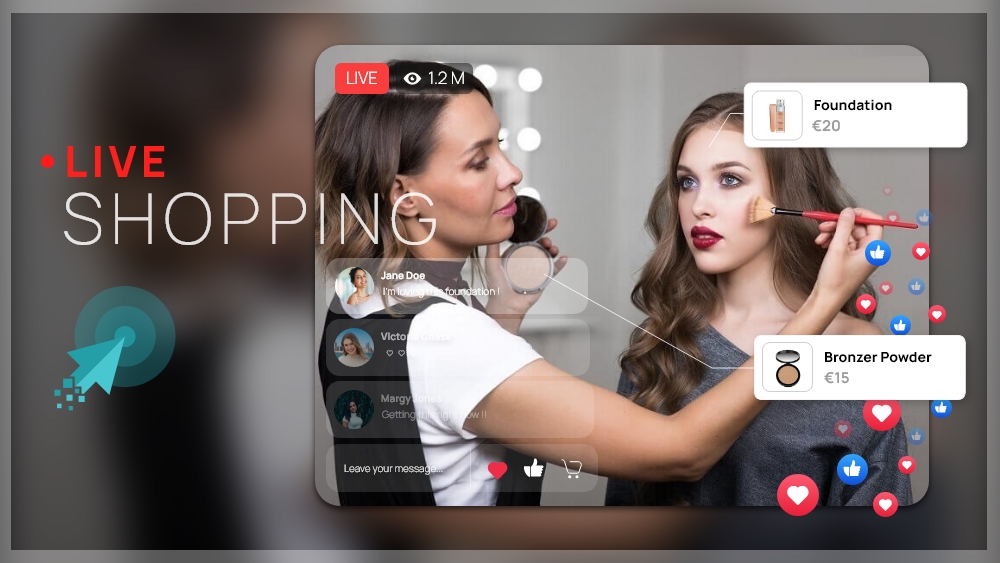
Live Shopping, also known as Live Commerce, is the live online presentation and sale of products through video streaming platforms.
By combining live video with social media platforms, live shopping allows businesses to bring elements of traditional home shopping into the digital environment.
Sellers present products and interact with customers through live video streams while viewers have the opportunity to make purchases online.
It is a modern version of traditional TV shopping and home shopping events, with the main difference being that products are presented through online video streaming.
Live shopping events often involve celebrities or influencers who dynamically present a range of products from specific brands.
Customers can learn about products and purchase them online through the video streaming platform, which is connected to the eShop so that the transaction can be completed.
The combination of online shopping, social media, and direct personal communication is one of the main advantages of live shopping.
The growing influence of influencers and the development of streaming technologies, combined with eCommerce, create significant growth opportunities for online retailers.
6. Personalized Shopping
Personalizing the consumer experience has long been an important objective for eCommerce companies.
The ability of an eShop to adapt its services to the individual preferences of each visitor is now becoming an expected feature of a modern online store.
Until recently, the personalized customer experience depended almost entirely on human interaction.
Businesses relied on personal communication between trained employees — particularly sales and customer service staff — and customers in order to provide the best possible service.
Salespeople could recommend products and offers because they understood their customers' needs and purchasing habits.
In modern eCommerce, however, applying this model manually at scale is practically impossible.
Today, with the help of modern technologies such as personalization engines, eShops and marketplaces can deliver a high level of personalized service without direct human intervention.
Personalization engines are software systems that allow businesses to identify and provide an optimized shopping experience for individual customers based on their previous interactions with the eShop and their predicted intent.
Companies use these systems to improve the experience of each user by ensuring visitors see the information that is most relevant to them, through the appropriate channel, in the way they prefer, and at the right time.
As online consumers become increasingly demanding and expect eCommerce services tailored to their individual needs, personalization technology continues to grow rapidly.
The sector has experienced strong annual growth and was projected to become a multibillion-dollar market.
What Do You Need Today?
Under today's conditions, creating a modern online store has become increasingly accessible in terms of both complexity and development cost.
With detailed planning and the right partners, a small or medium-sized commercial business can launch a fully operational, modern, mobile-friendly eShop within a relatively short period of time.
The large number of courier companies and online payment platforms now available provides modern entrepreneurs with the infrastructure required to establish a strong presence in eCommerce.
As networks and technology platforms continue to improve in terms of speed and security, more consumers are likely to trust online stores for their purchases and become increasingly familiar with the innovative services and conveniences offered by leading eCommerce brands.
Today, consumers have more choices than ever and tend to prefer online stores that provide product ratings and reviews.
They expect advanced search functionality, detailed product specifications and information, multiple delivery options, real-time availability information, several payment methods, immediate updates regarding the progress of their orders, and access to eCommerce services from virtually any digital device.